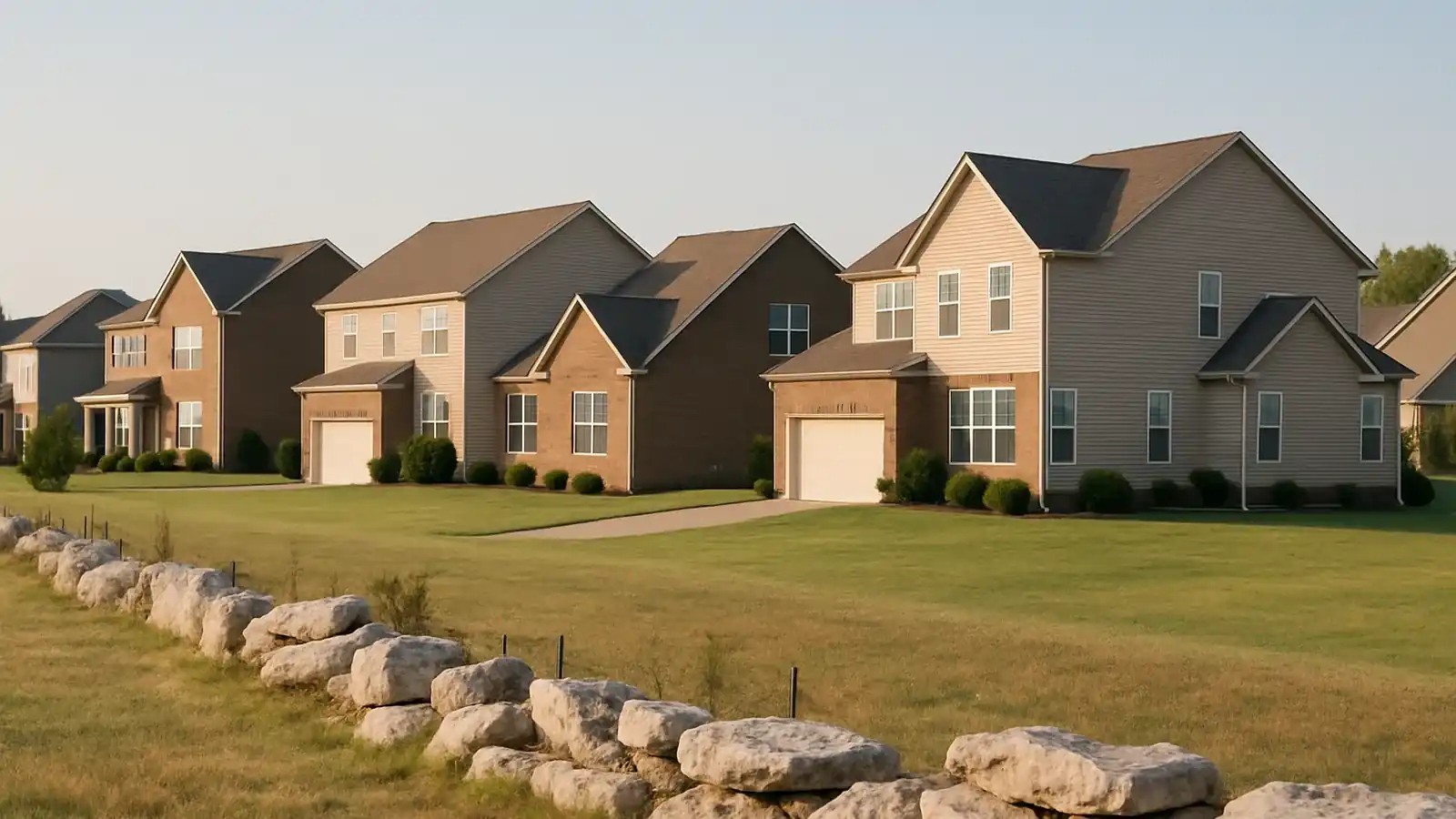
Drainage correction in Murfreesboro runs $1,500–$6,000 for most lots, and downspout and grading fixes frequently land under $500. Because clay damages foundations through moisture swings, controlling water at the foundation line is the cheapest structural work available here.
Here's why water is half the foundation conversation on this ground.
Moisture differential, not moisture
Evenly moist soil is survivable. What damages foundations is differential moisture. One side of the house wet while another dries. Downspouts dumping at a corner keep that corner's clay swollen through a wet winter while the opposite side contracts through August. The foundation spans the difference, and something has to give.
So the evaluation walks the outside as carefully as the inside: gutters and downspout terminations, the fall of the first ten feet of ground, beds holding moisture against the wall, tree proximity, air conditioner condensate, and where the neighboring lot drains. Those findings often explain a crack pattern better than the crack itself does.
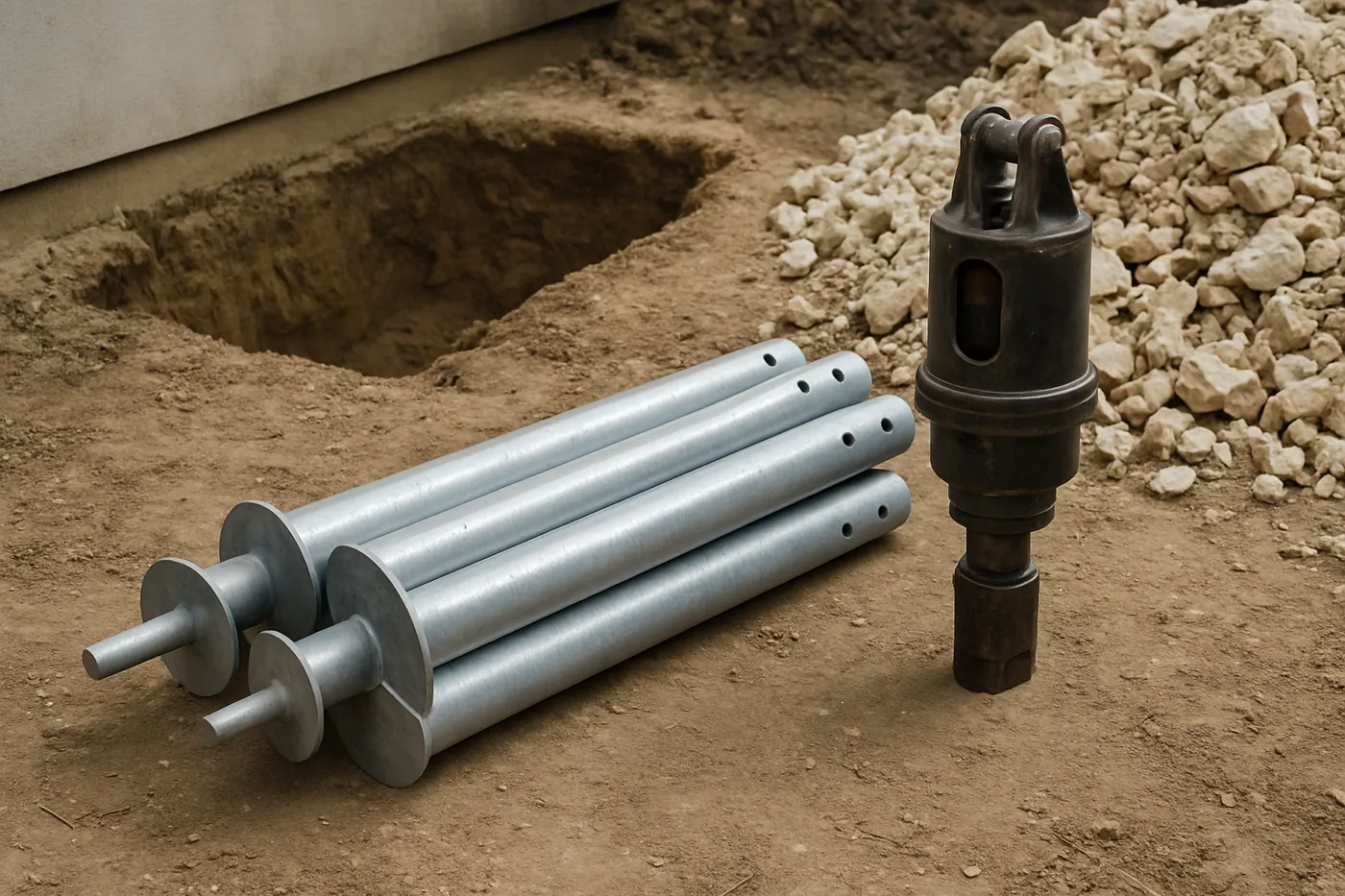
The ladder, cheapest first
- Downspout extensions: carry roof water well clear of the wall; often under $500 and frequently decisive
- Regrading: restore fall away from the foundation, and away from any low point that collects
- Swales and surface routing: intercept runoff crossing the lot before it reaches the house
- Subsurface drain lines: bedded properly, with a discharge point walked and verified
- Root management: a mature tree drinks hundreds of gallons in a hot week and dries its side of the house faster than the rest
Where the discharge goes matters more here than the method used to get it there. This is karst country, and routing concentrated water into a sinkhole or a low spot over solution-prone limestone solves a problem next to the house by creating one under the lot.
The karst consideration
Middle Tennessee's limestone carries documented solution features, and that changes one rule: discharge design matters beyond your property line. Water routed into a sinkhole feature or a solution channel doesn't disappear responsibly. It can move underground in ways nobody intends. A good plan walks every discharge route to its termination and designs around mapped features rather than pretending the water stops mattering at the property edge.
Where should the water go instead?
Roughly 53 inches of rain falls here in a year, much of it in heavy spring storms, and the signs it is not leaving are specific: a crawl space that smells earthy after rain, mulch washed into a fan shape, a basement wall that darkens near the floor for two days and then dries. Each of those points at a different part of the path.
| Correction | What it solves | Karst-country caveat |
|---|---|---|
| Gutters and long extensions | Roof water dumping at the footing | Cheapest real fix; discharge must clear the backfill, not just the wall |
| Regrading | Ground pitched back toward the house | Needs fall to somewhere: flat lots may have nowhere to send it |
| French drain | Water already moving through the soil | Outlet must daylight; never discharge toward a sinkhole or swallet |
| Interior drain and sump | Water that has already reached the slab edge | Manages what arrives rather than stopping it: the last resort, not the first |
In classic middle Tennessee karst the destination matters as much as the method. Water routed into a solution cavity does not disappear; it moves soil somewhere you cannot see.
Drainage questions, straight answers
Does drainage work actually prevent foundation repair?
Caught early, it genuinely can. Clay damages foundations through moisture swings, so steadying moisture at the foundation line reduces the swing. Extensions and regrading often cost a few hundred dollars (a fraction of piering) which is why they belong on the first lines of a scope rather than as an upsell at the end.
What should the grading around my house look like?
Ground should fall away from the foundation roughly six inches over the first ten feet. Lots lose that over time as beds build up and soil settles, leaving a reverse slope that steers every storm toward the wall. Correcting it is dirt work rather than construction, and it's the cheapest foundation insurance in this county.
Does karst terrain change drainage design?
It changes where water goes after it leaves your lot, which matters more here than in most markets. Limestone country moves groundwater through solution channels that surface grading doesn't predict, so discharge routes should be walked to their end point rather than assuming daylight is enough. Never discharge into an open sinkhole feature.
Do I need a French drain?
Sometimes, often not. Where a lot receives runoff from uphill or holds water against the foundation after storms, a properly bedded and discharged line is right. Where the real problem is four downspouts dumping at the wall, extensions solve it for a tenth of the cost. Ask for a price on the smallest fix that ends the water.
Get a Murfreesboro foundation evaluation
Tell us what the house is doing (stair-step cracks, doors that stick every August, sloping floors, separating trim) and we’ll pass your request on for an evaluation. A specialist who serves the Murfreesboro area will call you back.