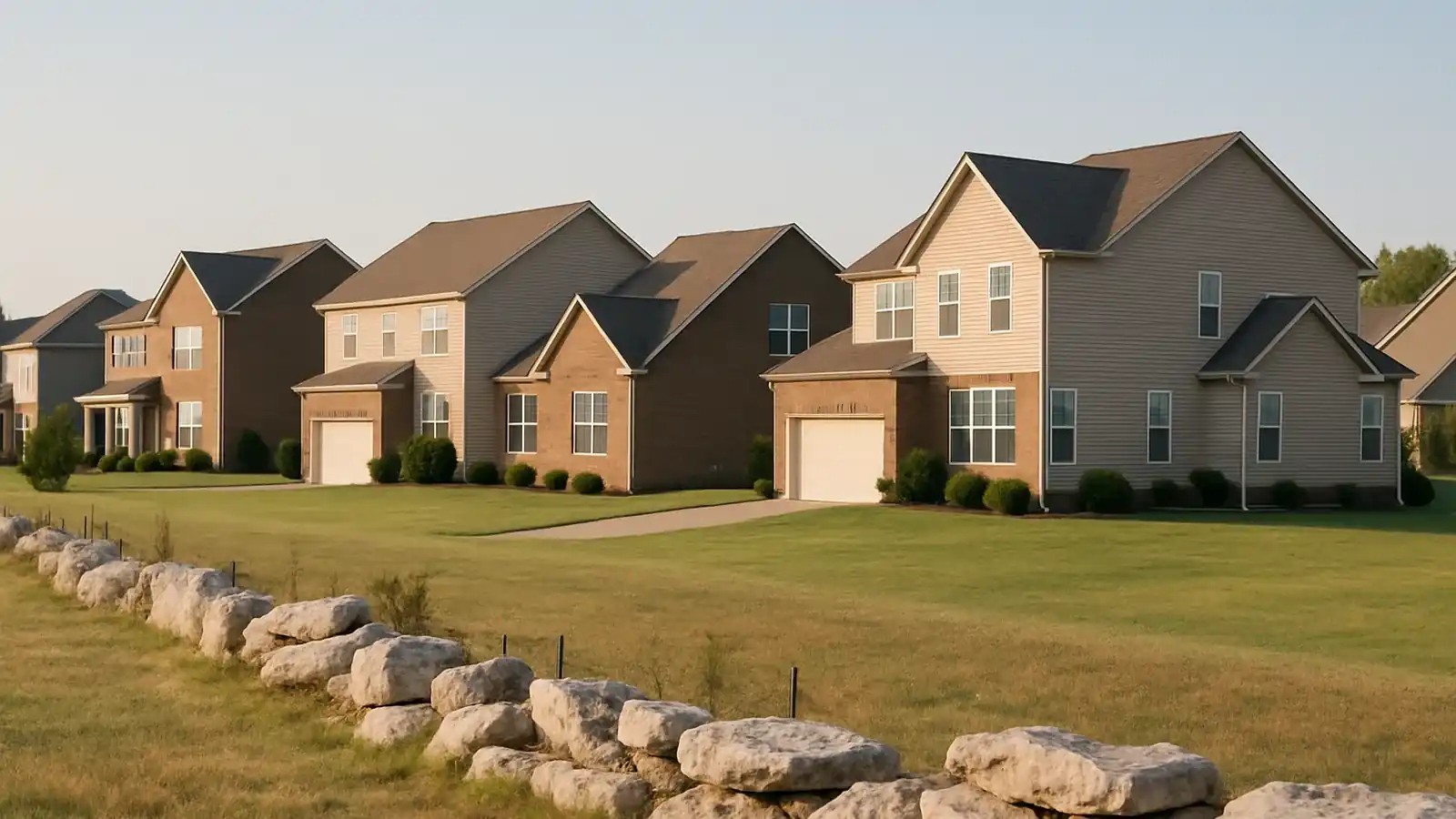
Murfreesboro Foundation Co. connects you with a local specialist for the full failure chain Central Basin ground causes: settlement (piering from $1,200/pier), slab movement (from $3,500), cracks (from $400), drainage (from under $500), and sunken concrete (from $500). Each preceded by a measured evaluation.
Foundation Piering & Underpinning
Steel piers to bearing, often shallow limestone here, with each location probed rather than assumed.
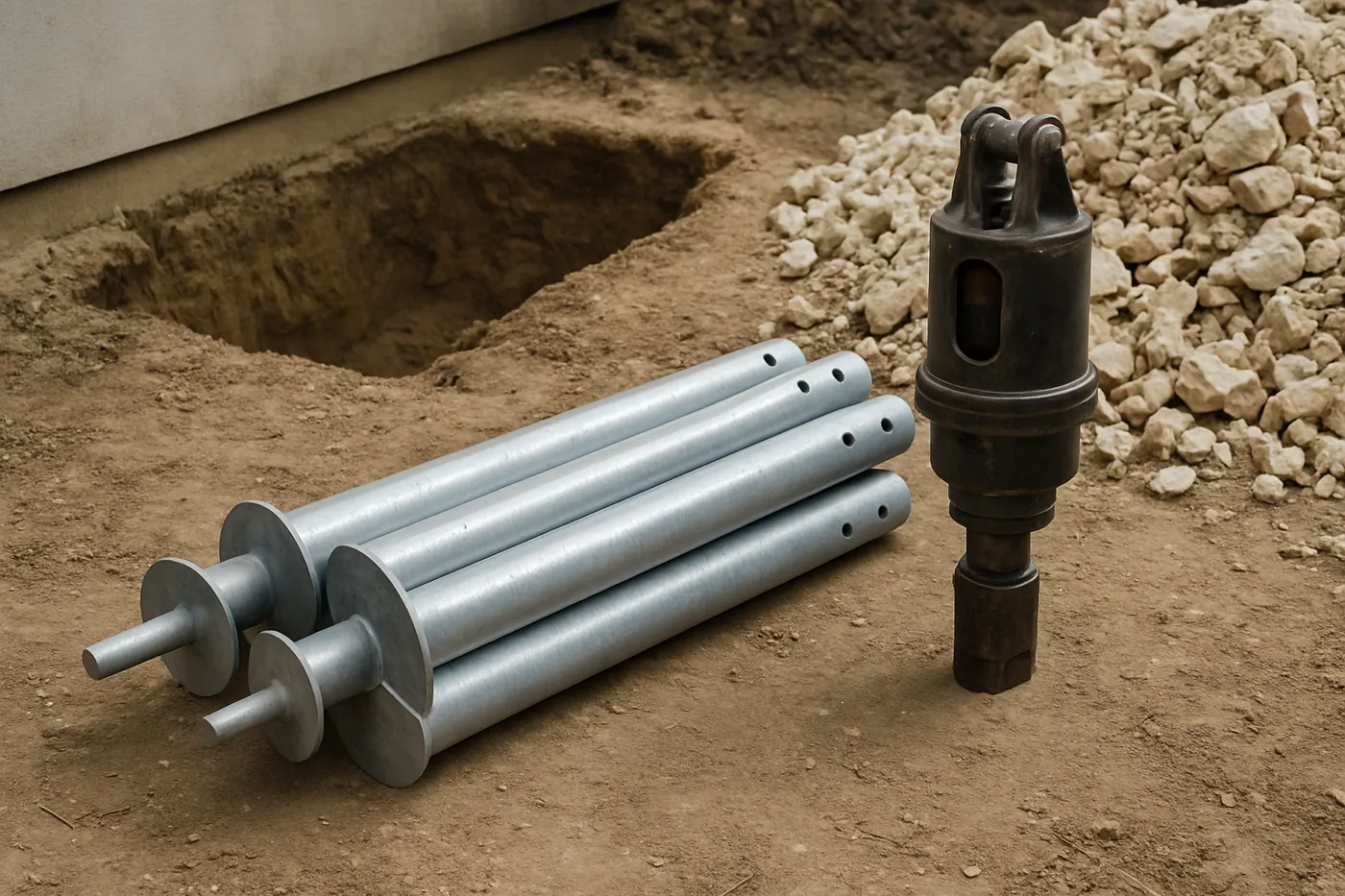
Slab Foundation Repair
Perimeter or interior support, including slabs that have settled with graded subdivision fill.
Foundation Crack Repair
Injection, carbon staples and masonry repair, common on newer houses where the fill has finished moving.
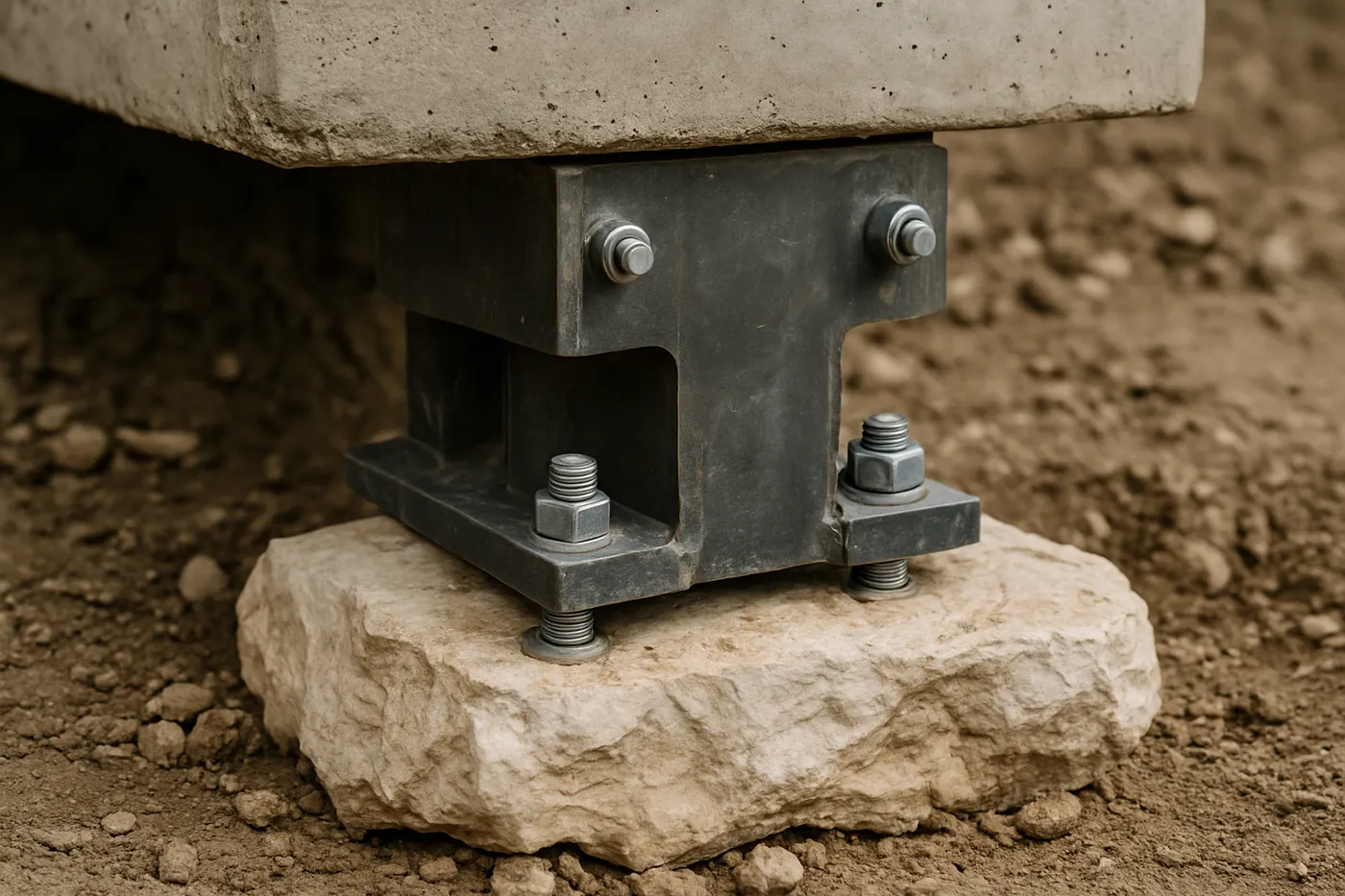
Drainage Correction
Routing water away from the foundation and away from any karst feature on the lot.
Concrete Leveling
Polyurethane lifting for drives, walks and porch slabs.
Foundation Settlement Repair
The full sequence where a corner has dropped, starting with whether it is the soil or the fill.
Helical Piers vs Push Piers
Helical against push piers where bearing is shallow limestone and a probe can find a void instead.
Exterior vs Interior Waterproofing
Which side to solve the water from, and where it can safely be discharged in karst country.
Insurance & Foundation Repair
What Tennessee policies typically exclude, including how fill settlement is treated.
Structural Engineer or Contractor?
When an independent engineer is worth the fee, and when the elevations already answer it.
Cost Guide: What Repairs Run in Murfreesboro
What actually moves a number here, and why deep-pier pricing deserves a question.
Why the services come as a set
Two different things move houses in Rutherford County, and they look alike from inside. Thin residual clay over limestone behaves one way, and graded subdivision fill settling under a newer house behaves another. A doorframe that will not close tells you neither of them apart.
That is the actual argument for one company across the whole set: not that you will need everything, but that telling apart a soil problem, a fill problem and a karst void requires looking at all three and having no reason to prefer one answer.
Which repair fixes which failure
| What you see | The ground mechanism | The fix | Typical range | Time |
|---|---|---|---|---|
| Stair-step cracks, dropped corners, sloping floors | Thin soil over limestone, or a solution cavity where the bearing has gone | Piers to stable bearing | $4,000–$15,000 | 2 days–1 week |
| Interior slab cracks, doors racking | Graded fill consolidating unevenly beneath a newer slab | Perimeter or interior support | $3,500–$12,000 | 2–5 days |
| Cracks widening between seasons | Movement still in progress: the distinction from fill that has finished | Injection and reinforcement | $400–$1,500 | Hours |
| Water pooling at the wall, soggy beds | Roof and lot water feeding the moisture cycle | Grading, extensions, drains | Under $500–$6,000 | 1–2 days |
| Stepped driveway joints, tilted patio | Backfill consolidating beneath flatwork | Polyurethane lifting | $500–$2,500 | Hours |
Two or more symptoms nearly always share one cause. One evaluation, one scope, one mobilization. That's the cost control this ground allows.
Sequence is the service
Anyone can install a pier. The skill is ordering the work so it stays fixed: water managed before steel goes in, structure stabilised before finishes are repaired, cosmetics last and only once movement is provably over.
In new subdivisions that last condition often argues for waiting rather than working. Fill settlement is usually front-loaded, so a house that moved in its first years and has since stopped may need cosmetic repair and nothing structural at all. Ask for a scope written in sequence with a price on each line, and with no lines the measurements do not justify.
Service questions
Which service does my house actually need?
The first step is establishing whether it is the soil, the fill, or a void. Those look alike from inside and want different repairs. The elevations and a probe answer it, and the scope follows from there.
Is there a charge for evaluations?
Many local specialists don't charge for the evaluation, but it depends on the company, so ask when they call. Ask for the photographs, the crack measurements and the laser floor elevations whether or not the specialist ends up quoting the work, including when the honest answer on a newer house is that the movement has already stopped.
Can one crew handle structure and water together?
One crew can handle structure and water together, and in karst country the water half needs someone thinking about where the discharge ends up, not just where it leaves the wall.
Get a Murfreesboro foundation evaluation
Tell us what the house is doing (stair-step cracks, doors that stick every August, sloping floors, separating trim) and we’ll pass your request on for an evaluation. A specialist who serves the Murfreesboro area will call you back.