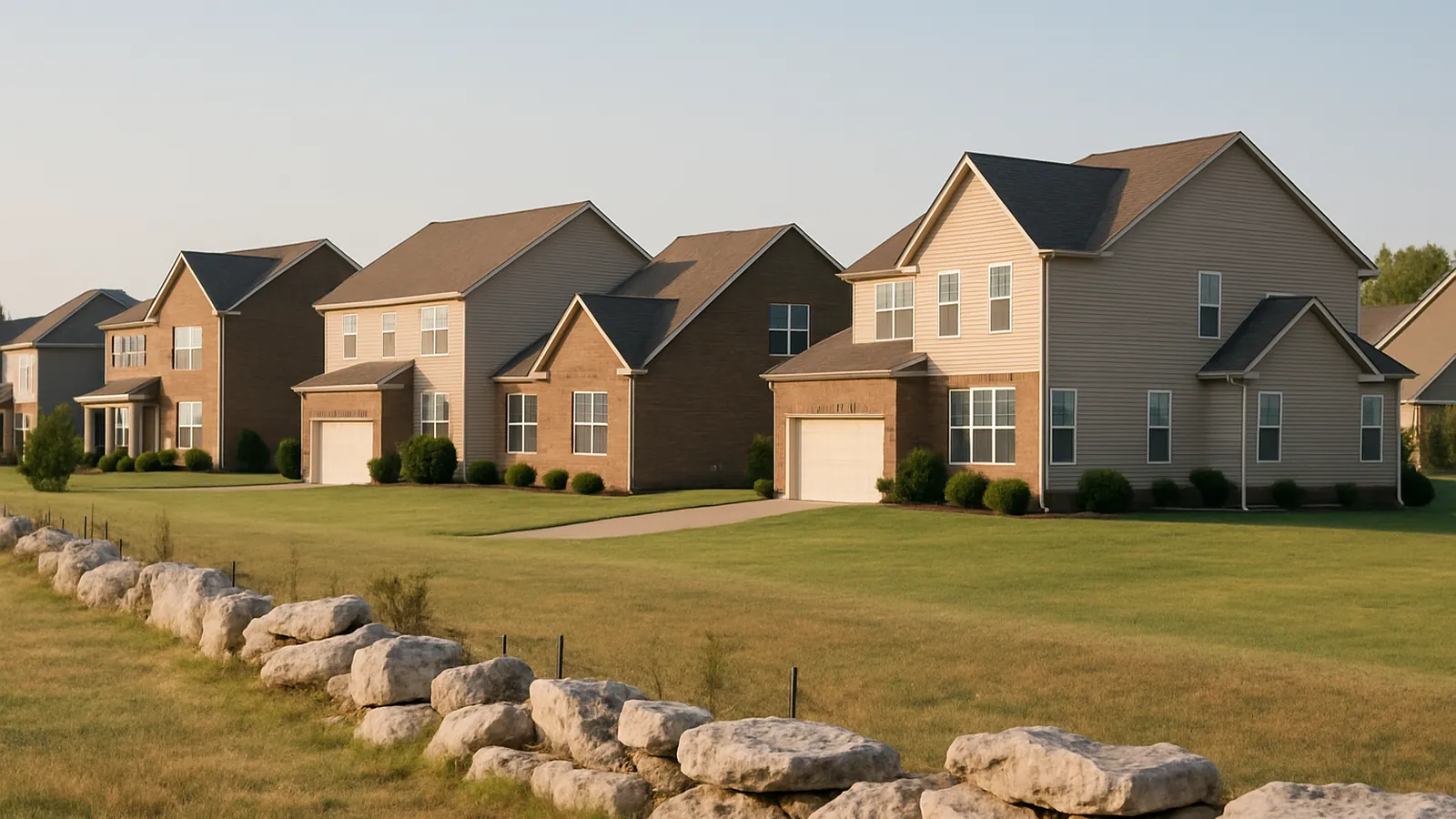
Exterior foundation waterproofing in Murfreesboro means grade-level water management more than wall membranes: slab and crawl-space homes dominate, so the work is drainage correction at $1,500–$6,000, crawl-space moisture control, and karst-aware discharge routing.
What water does to each foundation type here, and the order to spend in.
Why the usual debate barely applies
In basement country, exterior-versus-interior waterproofing is a wall argument. Murfreesboro ’s housing answers differently: the subdivision boom built slab-on-grade, the older basin stock rides crawl spaces, and true basements are the exception. What every foundation here shares is the water load — 53 inches a year with heavy spring storm periods — and three grounds that respond to it: placed fill that softens, residual clay that swells and shrinks, and limestone that quietly accepts whatever fines concentrated water delivers. Water management here is grade-level strategy, house by house.
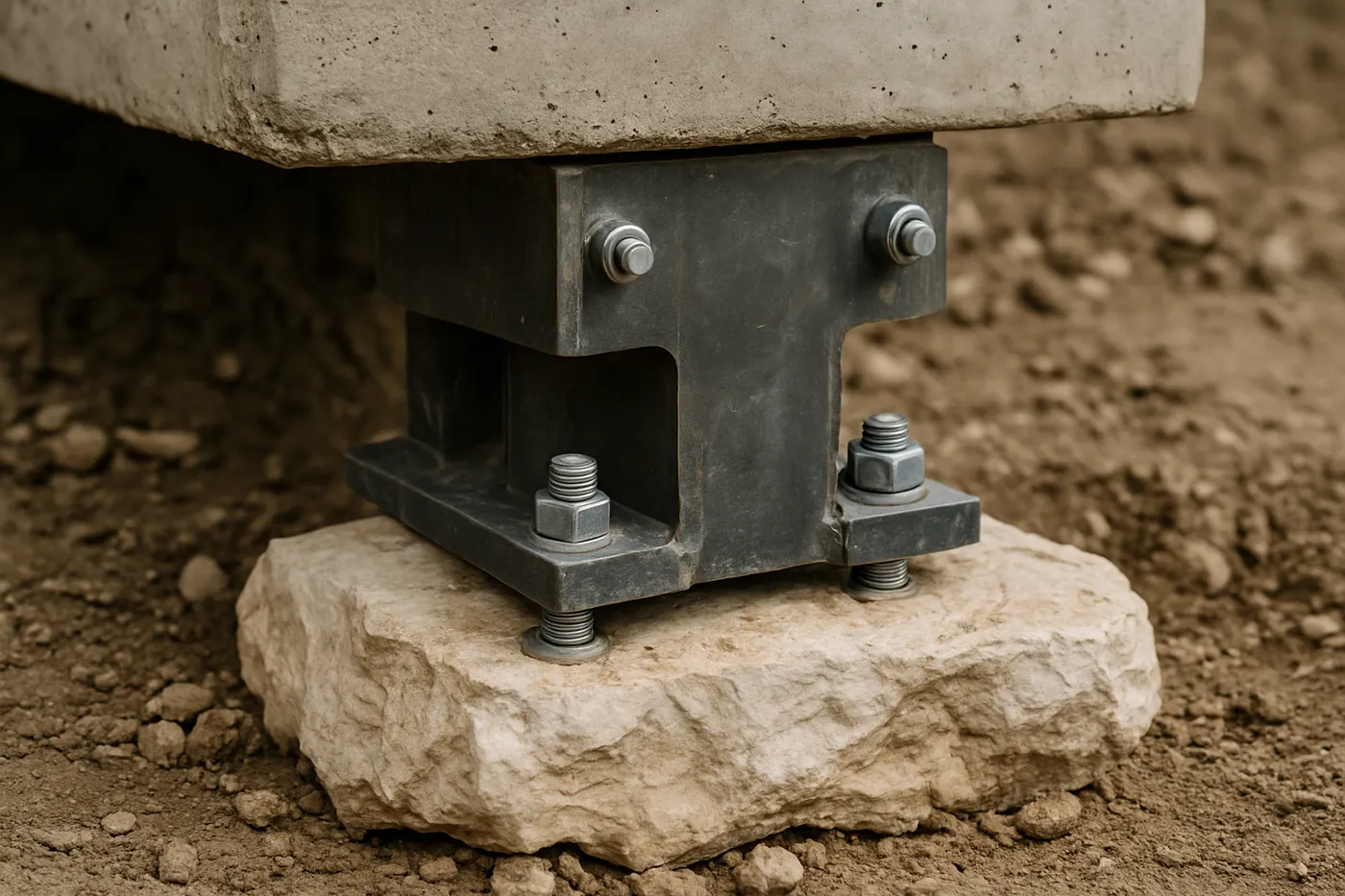
Water strategy by foundation type
| Foundation | What water does | The right defense |
|---|---|---|
| Slab on a graded lot | Edge swings, fill softening, drainage-plan violations | Gutters, grading, discharge — drainage correction |
| Crawl space (older stock) | Wet ground feeds rot in sills and girders | Exterior drainage, dry grading, clear ventilation |
| Basement (the exception) | Seepage and wall moisture as anywhere | Interior drainage; membrane when the wall is already open |
The graded-lot clause
New subdivisions come with engineered drainage — swales, lot-to-lot grades, planned paths for storm runoff — and a share of “foundation water problems” on young houses are really drainage-plan violations: a fence line damming a swale, landscaping that reversed a grade, downspouts feeding the neighbor’s low corner. Restoring the plan is cheaper than any system, and on lots with placed fill it’s also settlement prevention, because water is what turns marginal fill into moving fill.
The karst discharge rule
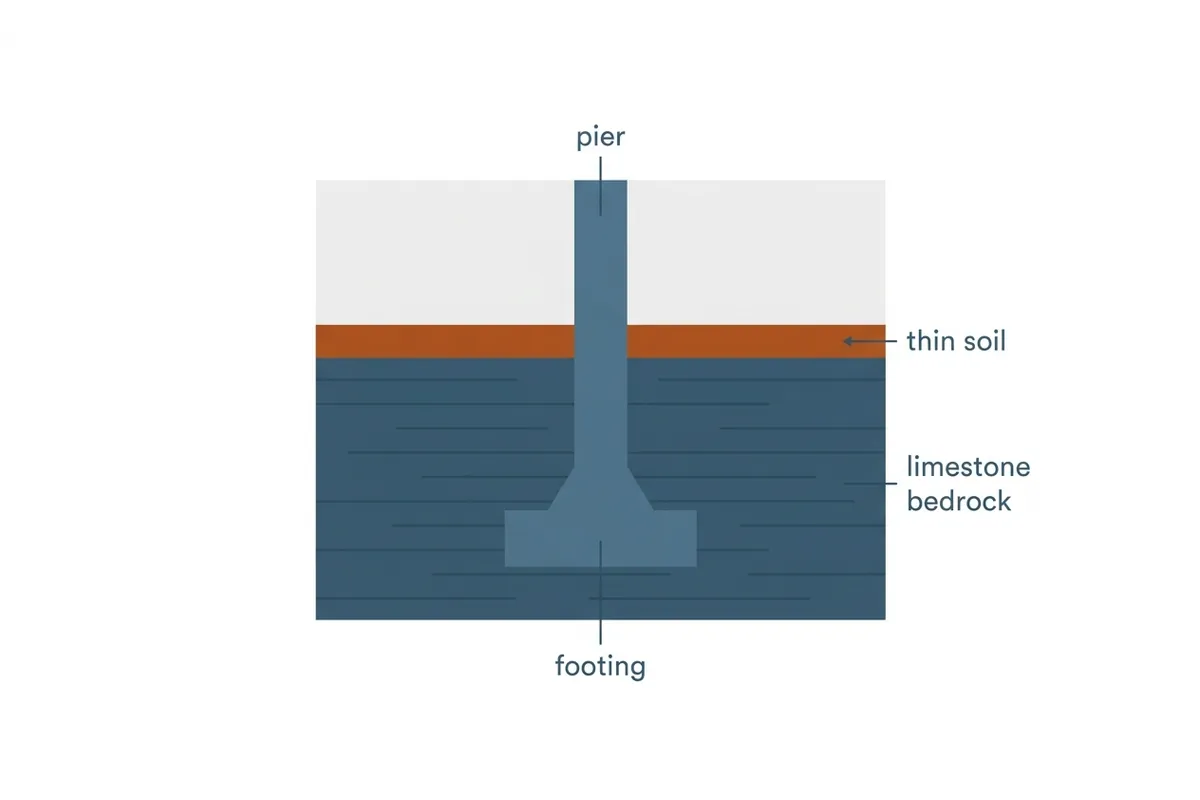
Where water goes matters more on this basin than in most metros. Concentrated discharge into a depression is precisely how fines migrate into openings in the limestone — so Murfreesboro systems route discharge to disperse: away from the foundation, never into the yard’s low spot, never toward anything the county’s karst mapping notes nearby. It costs little at install and it’s the difference between solving a house problem and feeding a ground problem. Where a below-grade room does need a system, interior-first logic applies, and every price is in the cost guide.
What the system needs from you afterward
Grade-level water management is the kind of system that fails quietly from neglect rather than from age. Once a year, walk it: clear the discharge outlet and confirm it still runs to daylight well away from the house, check that the last storm didn’t re-cut a channel back toward the foundation, and clean the gutters — on a graded-lot fix, gutters are part of the system, not an accessory. If a sump is involved, pour a five-gallon bucket in and watch the float actually lift and the pump actually run. And keep the karst rule in force forever: discharge stays dispersed and away, never into a sink or a low spot, because a swallet doesn’t care that your drainage is new.
Waterproofing questions, straight answers
Does Murfreesboro housing even have basements?
Mostly not — slab dominates the subdivisions and crawl spaces carry much of the older stock, with true basements the exception. So 'waterproofing' here usually means managing 53 inches of rain at grade: protecting slab perimeters, keeping crawl spaces dry, and handling the occasional below-grade room the standard interior-first way.
What does water management mean for a new slab home here?
Perimeter discipline on a graded lot. Subdivision grading concentrates runoff along engineered paths, and when downspouts or swales feed water somewhere it wasn't planned, the slab edge and the fill under it both pay. Gutters, extensions, grading that sheds, and respect for the lot's drainage plan — that's drainage correction at $1,500 to $6,000, and it's the highest-value water work a new house can buy.
And for the older crawl-space stock?
Dry ground and moving air. Water standing under a farmhouse feeds rot in the sills and girders carrying it, and middle Tennessee humidity does the rest. Exterior drainage to stop water arriving, grading so it can't pond, clear ventilation so moisture keeps moving — a crawl space that stays wet after spring storms is a structural problem in progress.
Where should sump or downspout discharge go on karst ground?
Dispersed, away from the foundation, and never into a depression. Concentrated water poured into a low spot is the mechanism that moves soil fines into openings in the limestone — the slow plumbing of a karst basin. Routing discharge to spread rather than pool costs little at install and protects both the house and the ground under it.
What should I fix before paying for any system?
Roof water, first and always. Fifty-three inches of rain concentrated by gutters into a few downspout points drives the clay cycle, softens fill, and feeds the karst — every local mechanism at once. Extensions, grading, and discharge routing are cheap, first, and often the whole answer. Every evaluation we run starts at the downspouts.
What part of this can I do myself?
The cheapest part, usually, and often the highest-return. Extending downspouts, clearing gutters, and correcting the first ten feet of grade are homeowner work, and on plenty of houses they solve the problem outright — we would rather tell you that than sell you a system. What is not DIY is anything needing excavation, a footing-level drain, or a sump tied into plumbing and electrical.
Get a free Murfreesboro foundation evaluation
Tell us what the house is doing — stair-step cracks, doors that stick every August, sloping floors, separating trim — and we’ll schedule an evaluation with photos and measurements. We reply the same business day.