Foundation settlement repair in Murfreesboro runs $4,000–$15,000, with piers at $1,200–$3,000 each placed where an elevation survey shows the footing dropped. Three local causes are worth separating: consolidating fill under newer subdivisions, seasonal clay cycles, and the basin’s documented karst.
The three local settlement stories, how to tell them apart, and what repair involves.
Story one: the fill under the boom
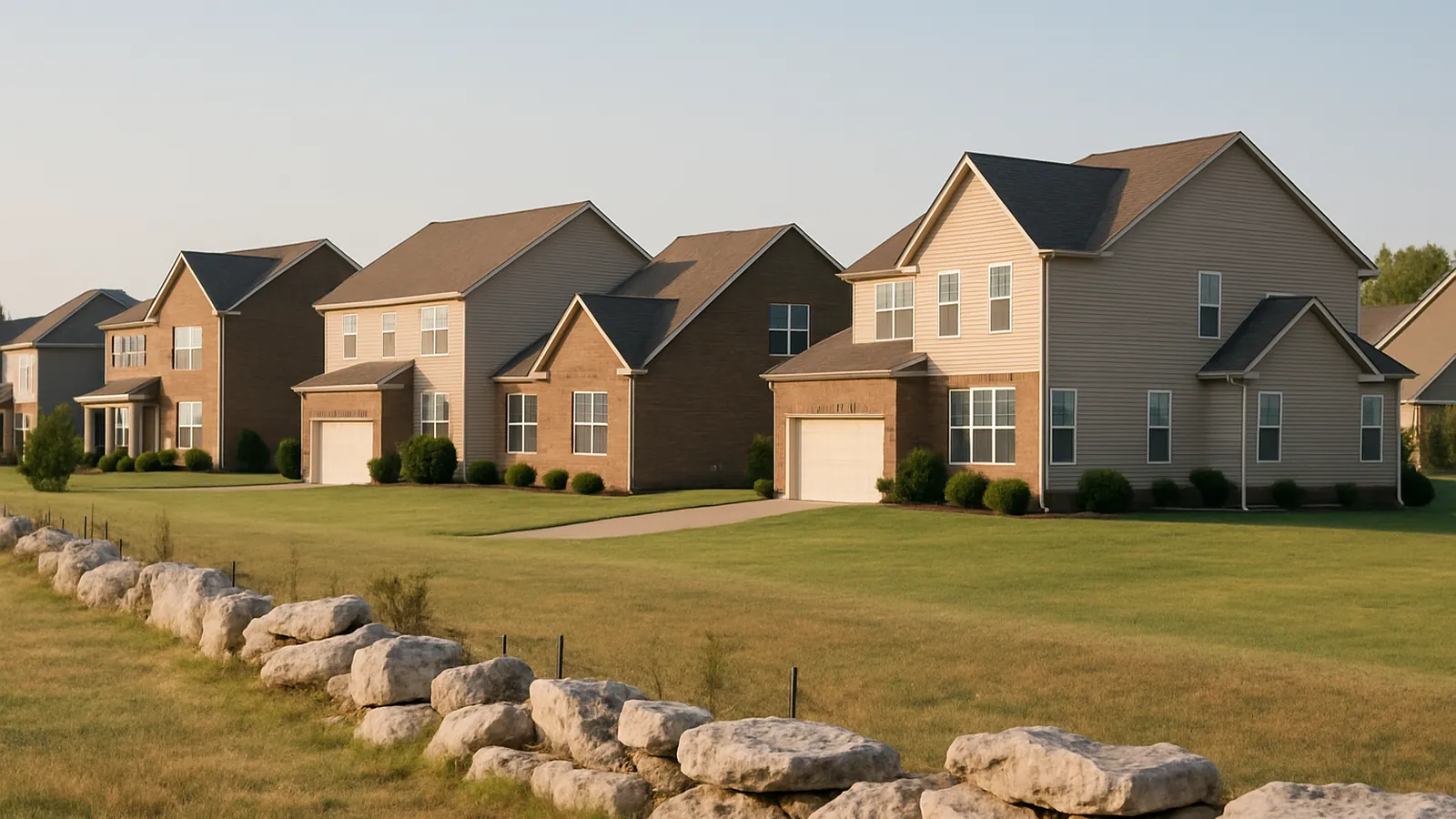
Murfreesboro’s growth story is written in graded lots. Subdivisions rise fast here, and grading a rolling Central Basin parcel to buildable pads means cutting high ground and placing fill in the lows — so parts of many newer foundations bear on soil that was placed, not formed. Well-compacted fill performs fine; fill that went in fast or wet keeps consolidating under load for years. The signature is a young house settling where the fill runs deepest: commonly a garage corner, the downhill side of the pad, or the back line of a lot that was obviously benched. If your house is newer and moving, check your builder’s structural warranty terms before paying anyone — and get the movement measured either way, because documentation is what a warranty conversation runs on.
Story two: the clay, and story three: the rock
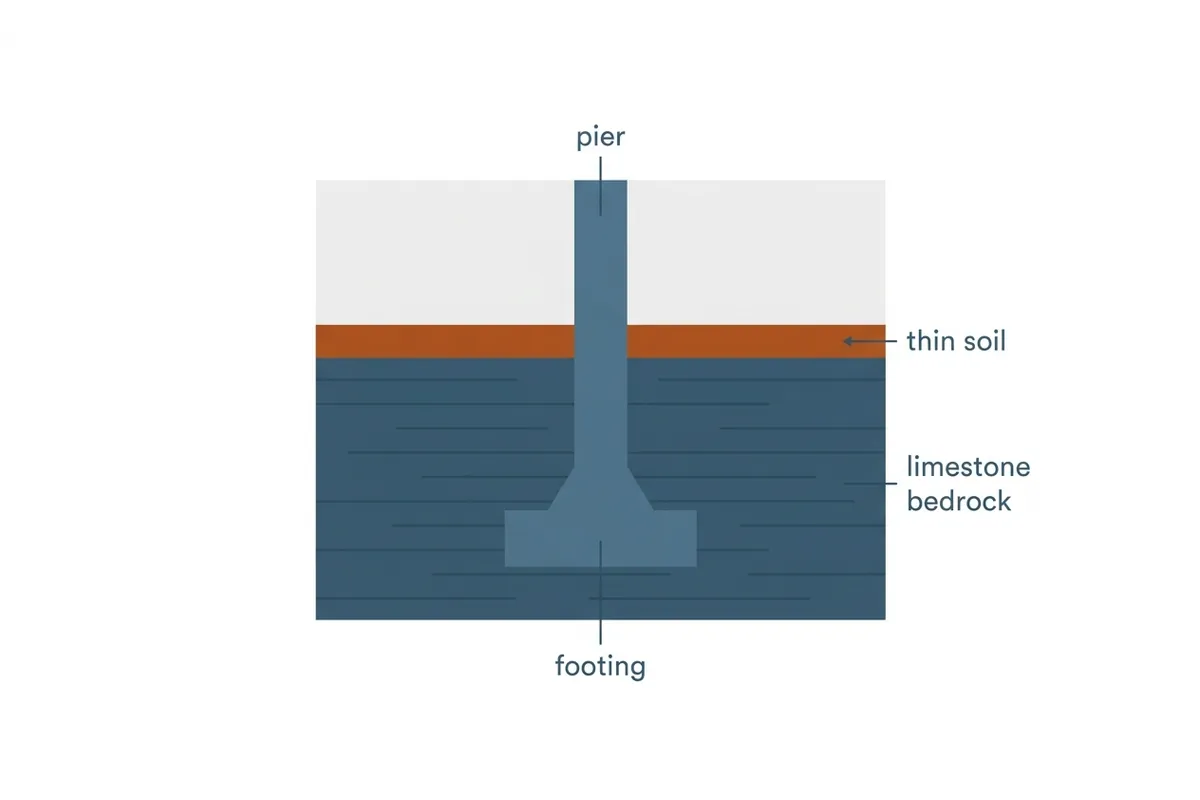
The basin’s residual clays run the familiar seasonal cycle — 53 inches of rain around dry late summers, swell and shrink, footings ratcheting down a little each round, worst on baked exposures and downspout corners. And beneath the clay, shallow Ordovician limestone carries classic middle Tennessee karst: sinkholes, solution cavities, and springs are documented throughout Rutherford County. Most settlement calls resolve to fill or clay. The karst check — movement that ignores weather, yard depressions, mapped features nearby — is the step that earns the “most,” and anything it flags gets independent geotechnical eyes before repair is designed.
Three stories, told apart
| Clue | Fill consolidation | Clay cycle | Karst |
|---|---|---|---|
| House age | Newer construction | Any age | Any age |
| Timing | Early years, steady | Tracks seasons | Ignores weather |
| Location | Where grading was deepest | Baked or downspout runs | Concentrated, sometimes mid-footprint |
| Yard | Normal | Normal | Depressions can accompany |
| First move | Survey + warranty check | Survey + drainage walk | Survey + records + engineering review |
How the repair works
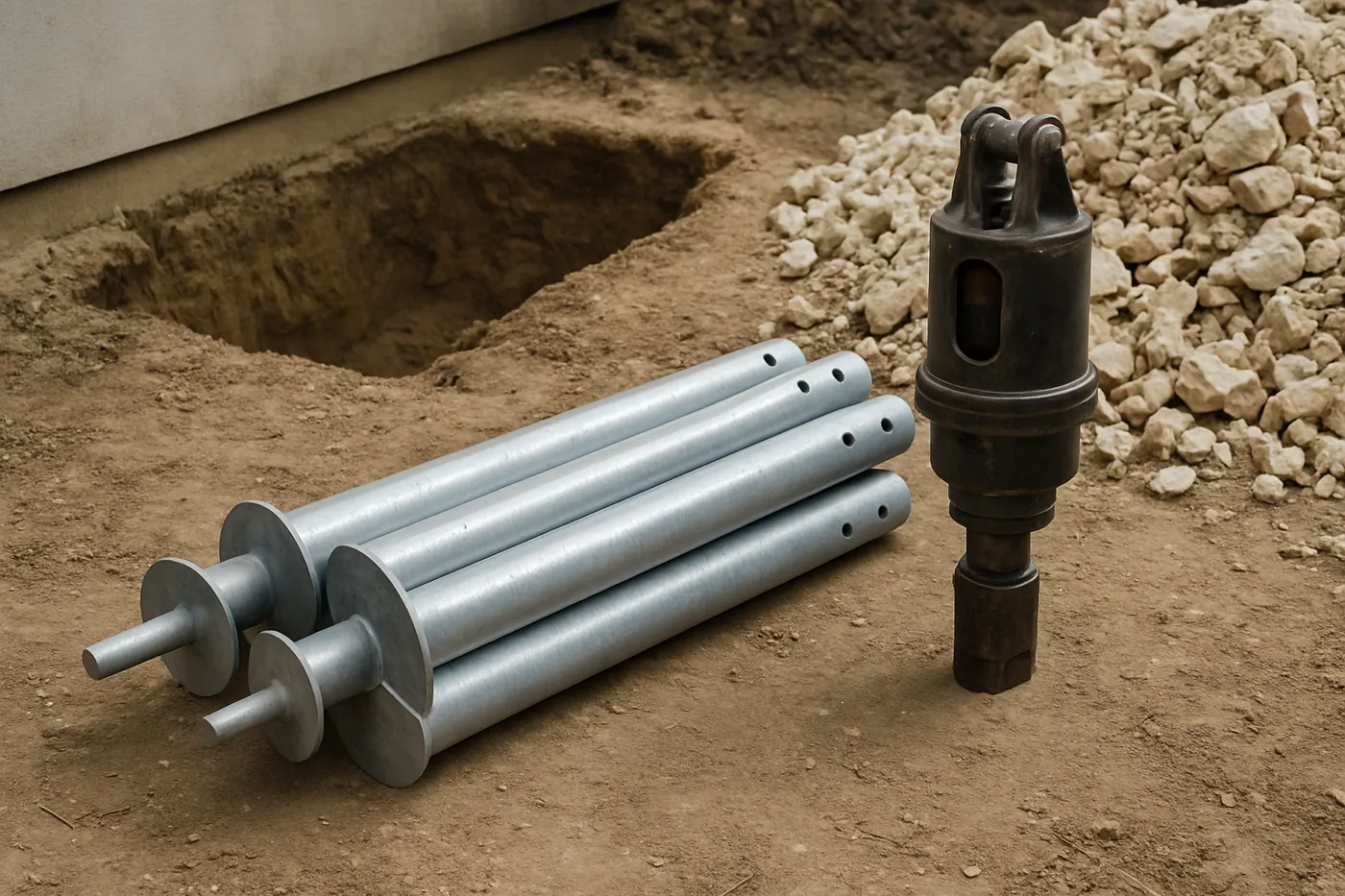
Steel piers carry the footing through fill and active clay to bearing — often the limestone itself, which on this shallow-rock basin means fewer sections per pier than deep-soil markets pay for. Each pier is logged; mechanics live on the piering page, the steel choice on the helical-versus-push page, and slab-specific cases have their own rules. Because spring storms load every mechanism at once, scopes here pair structure with drainage correction as a rule, and cracked masonry gets injection and stitching once movement is resolved. The cost guide itemizes every range.
The first year after the piers
Piers stop the movement; they don’t erase its history. Expect the house to settle into its new equilibrium over one full seasonal cycle — and in Middle Tennessee that cycle is real: saturated winters, then a late-summer dry-down that shrinks the same clay. Hairline cracks can breathe slightly through it. That’s why cosmetic repair is the last line item, not the first: patch drywall and re-point brick after a full wet-and-dry year, and you patch once. Until then, monitor cheaply — a dated photo and a pencil line drawn across each crack tells you in ten seconds whether anything moved. And keep the pier log with your closing documents; in a county that turns over as fast as Rutherford, the next buyer’s inspector will ask for it.
Settlement questions, straight answers
My house is only a few years old. Why is it settling?
Probably the fill, not the clay. Murfreesboro's subdivision boom grades lots to buildable planes, which means parts of many pads sit on placed fill — and fill consolidates under load for years if it wasn't compacted perfectly. The signature: settlement concentrated where the fill is deepest, often the garage corner or the downhill side of a graded lot.
How do I know if it's fill, native clay, or karst?
Timeline and pattern. Fill consolidation shows early in a house's life and concentrates where grading was deepest. Clay settlement tracks the seasons — dry-summer worst, partial wet recovery. Karst movement ignores weather and can pair with yard depressions; Rutherford County documents sinkholes and solution cavities throughout the basin, so we check records before assuming.
Does the builder's warranty cover settlement on a new house?
Sometimes — and the clock matters. Tennessee new-home warranties and builder agreements vary, but structural coverage windows exist, and settlement on a young house is exactly what they're for. Before paying anyone, pull your closing documents and check the structural warranty terms. Our measured survey gives you the documentation either way.
What do the spring storms do to all this?
They load the system. Fifty-three inches of rain arrives with heavy spring storm periods, and a saturated April swells the clay, softens fill, and — on karst — moves fines into openings in the rock. Houses that show new movement after a wet spring aren't coincidences; they're the basin's hydrology doing its annual audit of every foundation's weak point.
What does settlement repair cost in Murfreesboro?
Most full repairs run $4,000 to $15,000, with piers at $1,200 to $3,000 each — and shallow limestone often means piers reach competent bearing in fewer sections, which favors the low end. Fill-related repairs on newer homes are often more contained than owners fear. The written scope prices each pier location before work starts.
Get a free Murfreesboro foundation evaluation
Tell us what the house is doing — stair-step cracks, doors that stick every August, sloping floors, separating trim — and we’ll schedule an evaluation with photos and measurements. We reply the same business day.