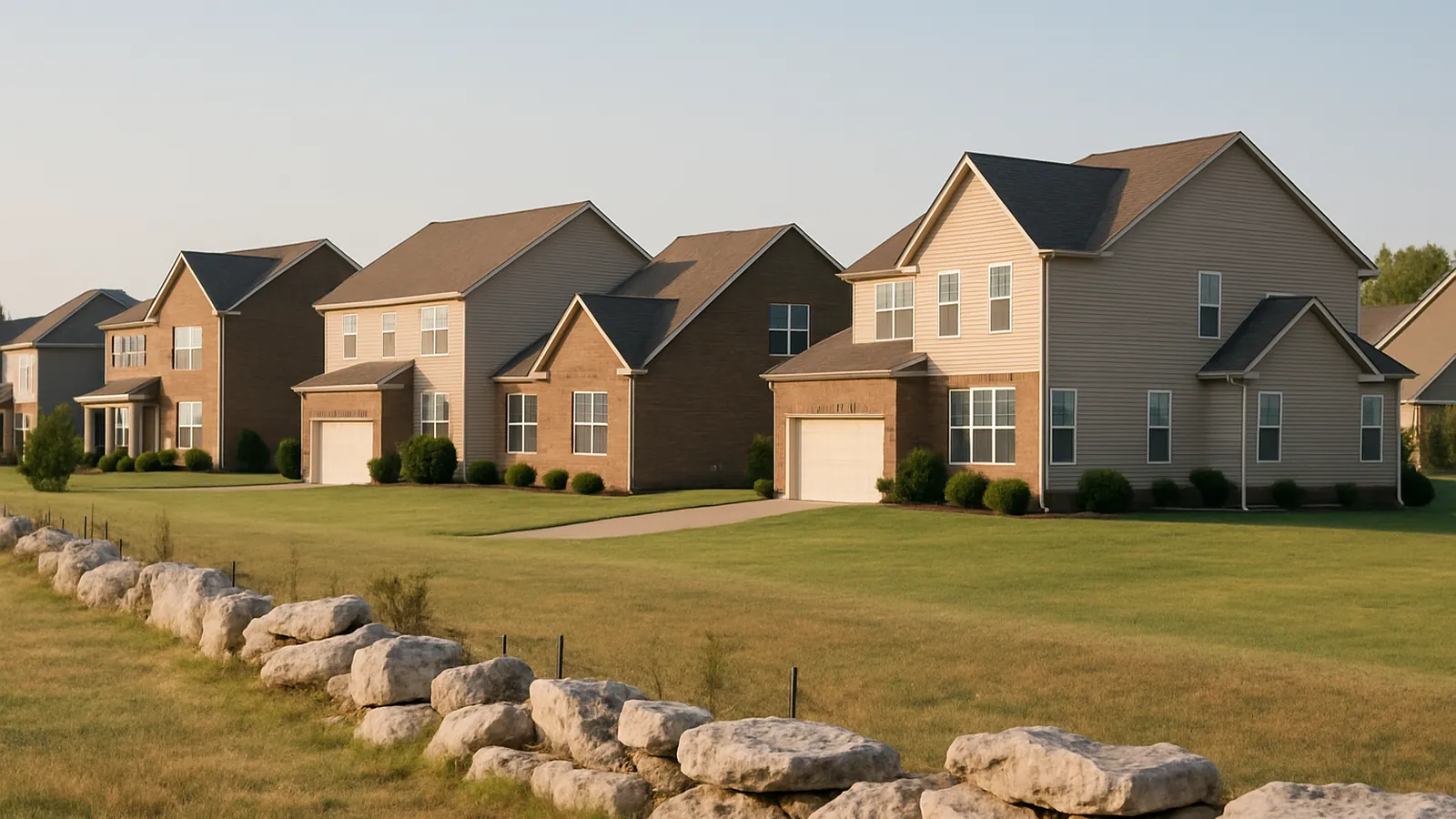
Helical and push piers for Murfreesboro foundation repair both run $1,200–$3,000 per pier, and shallow basin limestone often means fewer sections per pier. Push piers drive to logged refusal under heavier masonry; helicals torque to measured capacity — the fit for light subdivision frame and graded-fill lots.
How each proves capacity, and what fill and shallow rock do to the choice.
Two proofs of the same promise
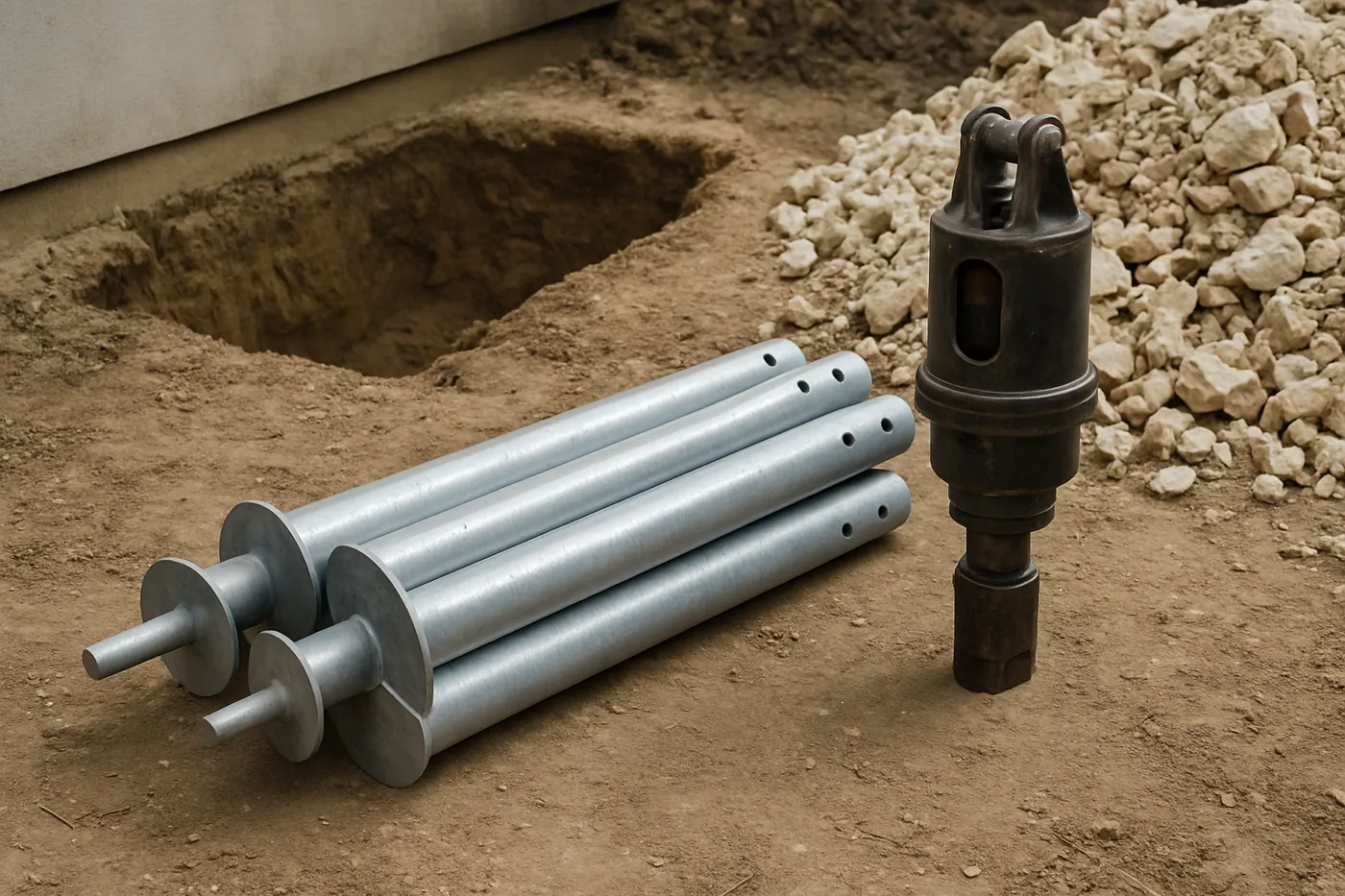
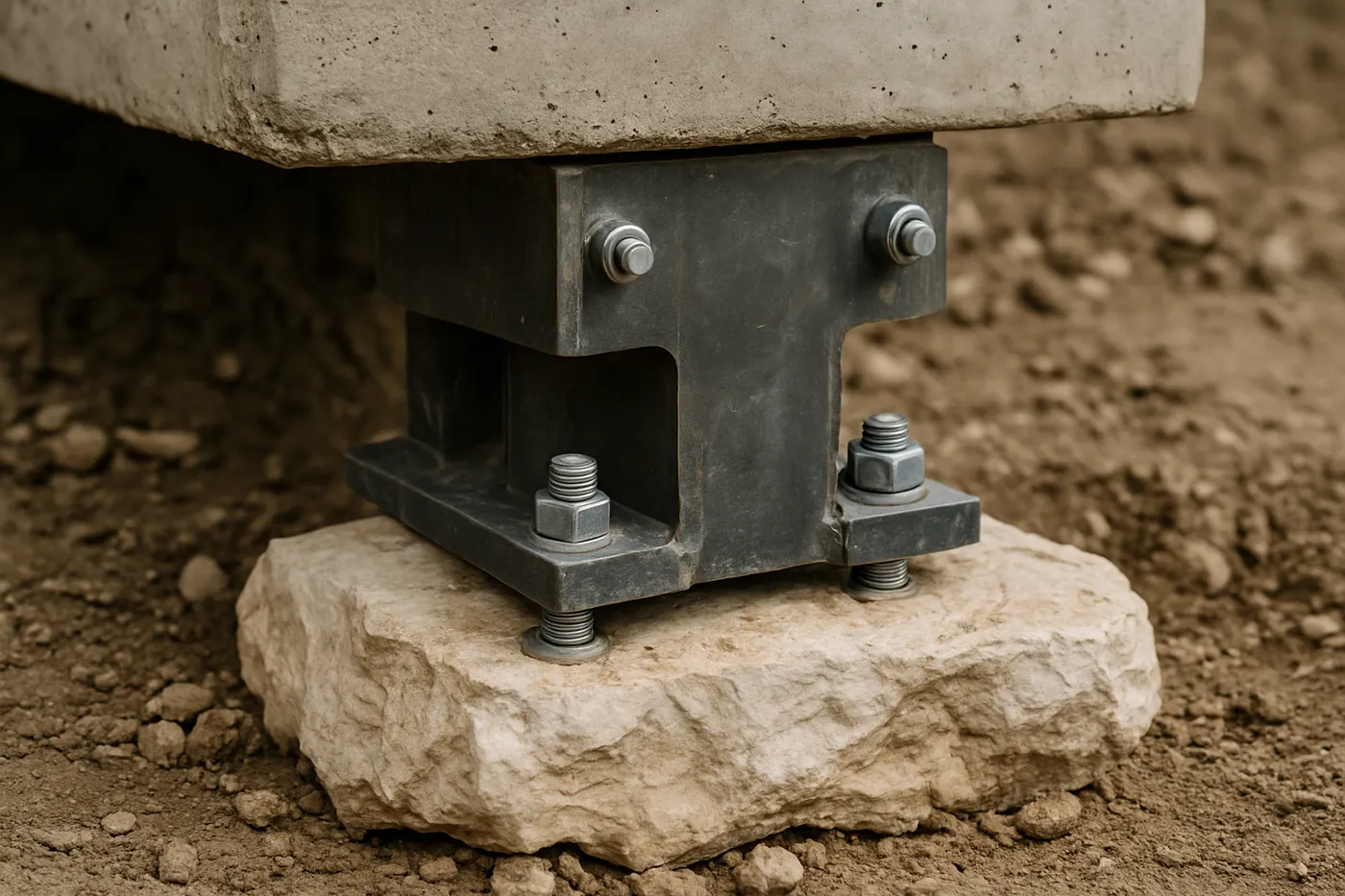
A pier here has to carry load through two untrustworthy layers — placed fill on graded lots, and the clay’s seasonal swing zone — to bearing that holds, often the Ordovician limestone itself. A push pier is hydraulic steel driven beside the footing using the structure as reaction weight until it refuses; the logged refusal is its proof. A helical pier screws in on welded plates, installation torque correlating with capacity — proven by the gauge as it turns, no house weight required.
Side by side
| Push piers | Helical piers | |
|---|---|---|
| Advance | Driven against the structure’s weight | Rotated to specified torque |
| Proof | Refusal pressure, logged per pier | Installation torque, logged per pier |
| Needs house weight | Yes | No |
| Murfreesboro fit | Older brick and stone with real mass | Subdivision frame, fill lots, porches, additions |
| Through placed fill | Proof only accepted below the fill | Proof only accepted below the fill |
| Cost | $1,200–$3,000 per pier; often fewer sections on shallow rock | |
The basin’s two pier rules
Rule one: fill is never bearing. On a graded lot, whatever the gauge says inside the fill layer doesn’t count — proof is accepted only below it, and pier depths legitimately vary across one foundation as the fill thickness does. That’s not a bid inflating itself; it’s the grading plan showing up in the steel. Rule two: verify the early stop. Shallow limestone frequently ends pier drives kindly and cheaply — but early refusal must prove rock, not a construction-debris boulder, and one odd log among consistent neighbors is how a floater announces itself. Where the settlement diagnosis has raised any karst flag, engineering review precedes steel entirely. Whether piers are the right repair at all is that diagnosis; install mechanics live on the piering page.
Reading a Murfreesboro pier bid
Ask every bidder — including us — for the per-pier proof commitment, the depth assumption with pricing beyond it, and the verification story for early refusal. On this ground those three answers are the whole difference between engineered repair and hopeful steel. The arithmetic honest answers converge to is in the cost guide.
What the pier warranty is actually worth
Read the warranty before you read the price. It covers the piers’ capacity — the supported section holding the load it was designed for — not the whole house, and not the parts nobody piered. Four questions separate a real warranty from a brochure: is it transferable to the next owner, does a transfer cost a fee, does it cover only the piered section or the structure, and does it survive the contractor closing its doors (third-party-backed warranties do; handshake ones don’t). In a resale market this active, transferability is worth real money at closing. Your torque or depth log is the evidence behind the paper — a warranty without the install record is a promise with nothing to check it against.
Pier questions, straight answers
Do the two pier types cost differently in Murfreesboro?
No — both run $1,200 to $3,000 per pier, and on this basin the spread often leans low: shallow Ordovician limestone means piers frequently reach competent bearing in fewer sections than deep-soil markets burn. The care point is verifying that early refusal is genuine rock, not a boulder in fill — which is exactly what per-pier logging exists to prove.
Which type fits the new subdivisions?
Helical, usually. The one- and two-story frame construction filling Blackman, Buchanan, and the new corridors is light — a push pier reacting against it can run out of house before honest refusal. Helicals torque to measured capacity regardless of the structure, and they're also the right steel through unconsolidated fill, where drive behavior through placed soil tells its own story.
Which type fits the older farmhouse and in-town stock?
Push piers where the mass exists — older brick and stone carries reaction weight enough to drive steel to convincing refusal. Plenty of the older stock is light frame, though, and takes helicals like the suburbs do. The structure at each location picks the pier; the era of the house just sets expectations.
How does fill change pier installation?
It's the layer piers exist to get through. Placed fill can't be trusted as bearing regardless of how it drives, so proof — refusal or torque — is only accepted below it, at native strata or rock. On a graded lot, that means pier depths can vary across one foundation as the fill thickness varies. The per-pier log records each one's honest depth.
What documentation should any pier bid include?
Three commitments in writing: per-pier proof logging (torque or refusal), the depth assumption with pricing beyond it, and how shallow anomalies get verified as bearing rock rather than fill debris. On a graded-fill basin over karst, the third question separates crews who know this ground from crews who've only priced it.
How long does the install take, and do we have to move out?
Most residential pier jobs run two to five days depending on pier count and access, and nearly everyone stays in the house. Expect equipment in the yard, excavation at the footings, and noise during working hours. Interior disruption is usually limited unless the scope includes a basement wall. The yard takes the visible hit, and restoration should be written into the scope.
Get a free Murfreesboro foundation evaluation
Tell us what the house is doing — stair-step cracks, doors that stick every August, sloping floors, separating trim — and we’ll schedule an evaluation with photos and measurements. We reply the same business day.