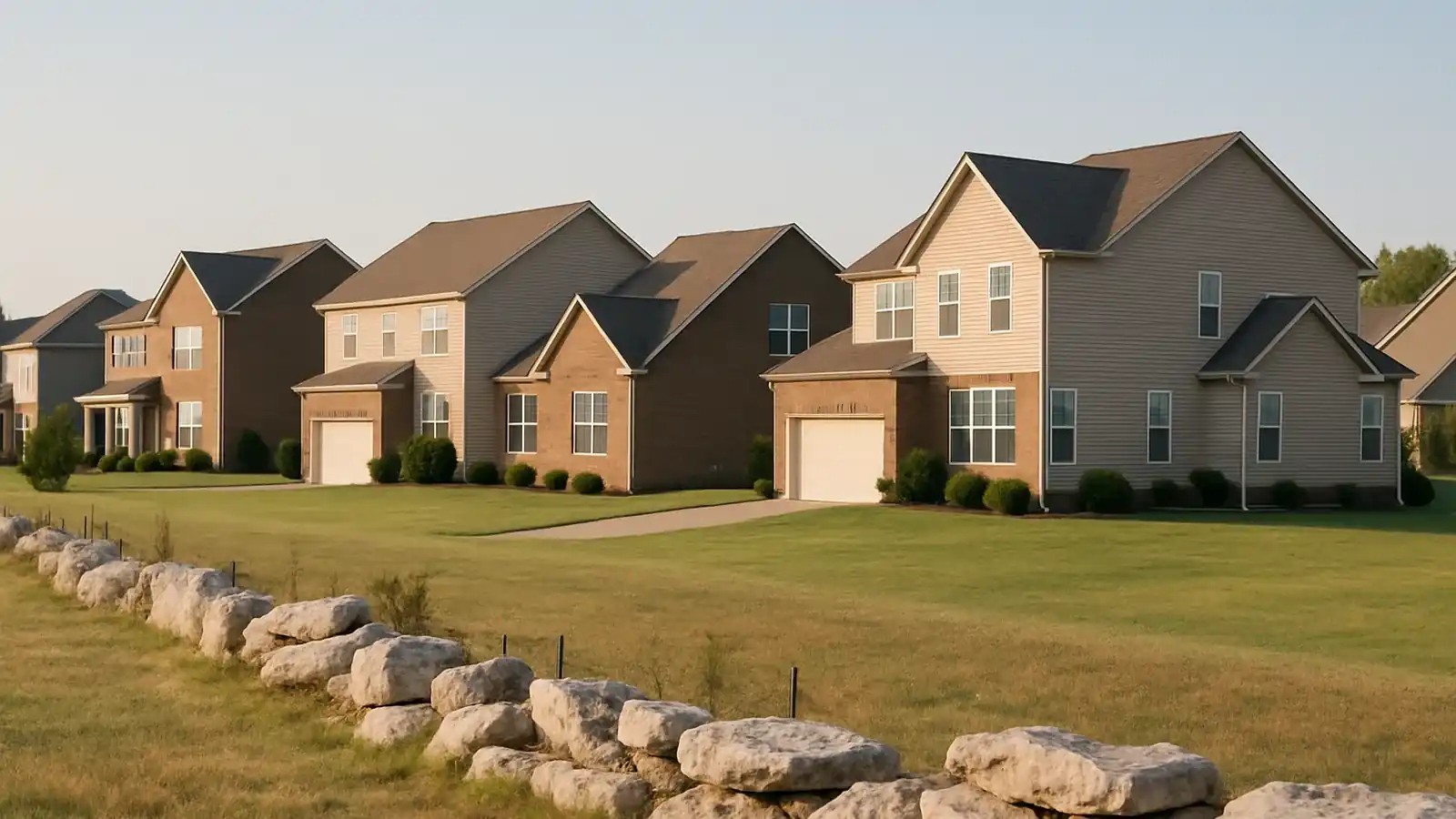
La Vergne homeowners pay $4,000–$15,000 for most structural foundation repairs, from about $400 for a single crack injection. Residual clay cycling over an uneven rock surface produces uneven bearing: exactly what a measured evaluation is built to find.
Graded lots and the fill question
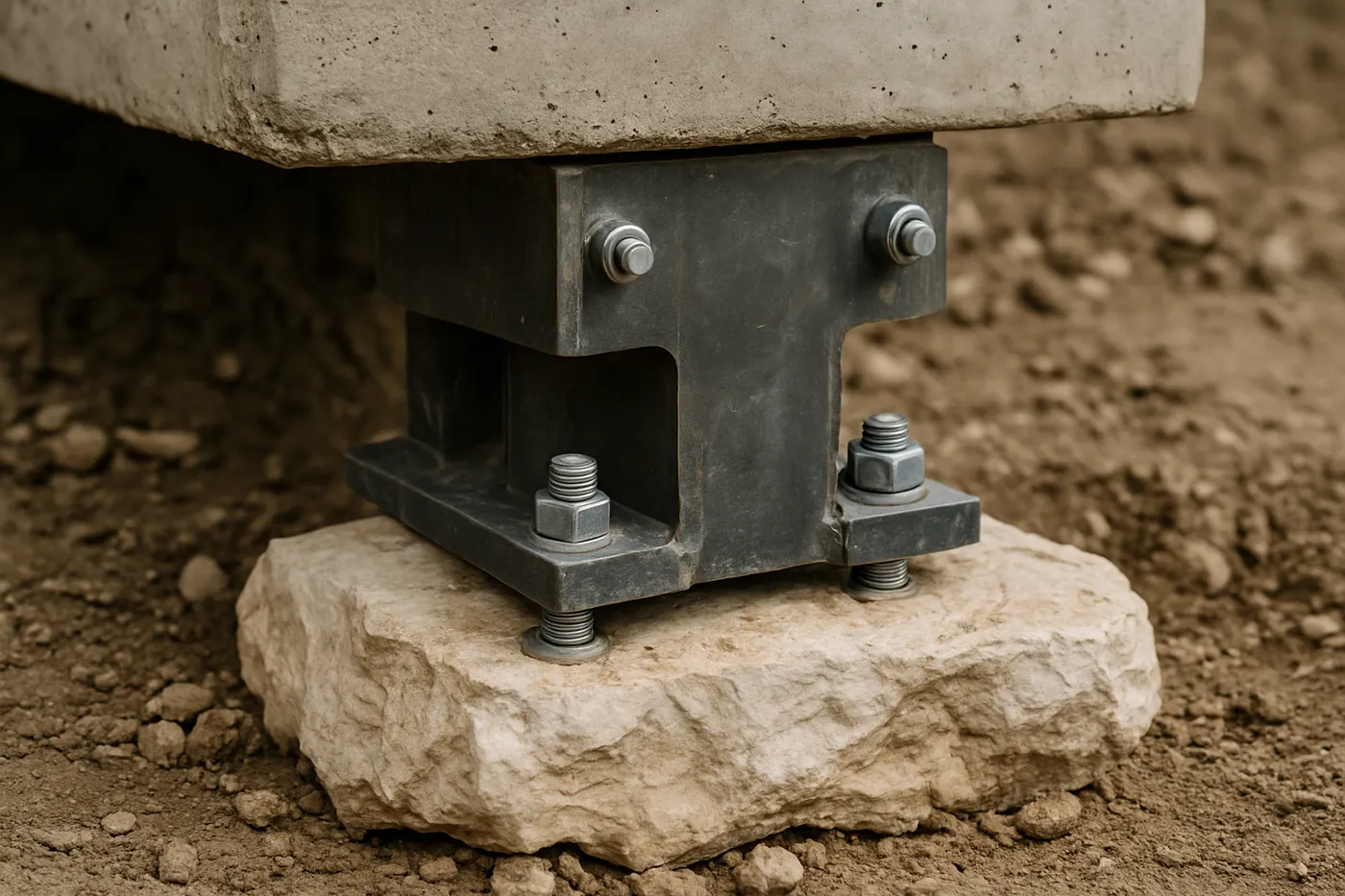
La Vergne's expansion came quickly and close to the I-24 corridor, which meant significant grading to produce level building pads on ground that wasn't naturally level. Cut-and-fill construction creates a specific condition: part of a house may sit on undisturbed native soil (the cut side) while another part rests on placed fill. Those two portions settle differently: the fill continuing to consolidate for years while the cut side essentially doesn't move.
The resulting pattern is recognizable: cracking concentrated along one line of the house, frequently corresponding to where the cut meets the fill rather than to anything visible in the yard. Identifying that boundary is the first diagnostic task on a La Vergne evaluation, because it determines both pier placement and pier depth: fill-side piers must pass entirely through the placed material to reach native bearing.
Newer homes, real problems, honest timelines
Homeowners here are often told a young house can't have foundation trouble. On cut-and-fill lots that isn't true, and the laser survey settles it quickly in either direction. Where the survey finds movement within tolerance, the honest advice is monitoring. Where it finds an inch of differential across the plan, the numbers make the case without anyone raising their voice.
Asked in La Vergne
How do I know if my house is on fill?
The plat and the topography usually tell, and the crack pattern often confirms it: cut-and-fill homes crack along a line corresponding to where the two meet rather than at a random corner. A good evaluation checks development records where available and reads the floor survey against them. That boundary determines pier placement and depth.
Does being on fill mean the builder did something wrong?
Usually not. Cut-and-fill grading is standard practice for making buildable pads on uneven ground, and properly compacted fill performs well. What matters is that fill and native soil settle on different schedules regardless of compaction quality, which is a soil-mechanics fact rather than a construction defect.
Is my La Vergne home still under warranty?
Worth checking before spending anything. Tennessee structural warranty windows commonly extend years past cosmetic coverage, and documented foundation movement may qualify. Warranty administrators want measurements and a stated cause: precisely what to ask for in the evaluation report, whichever way the claim goes.
Will piers on the fill side need to go deeper?
Piers on the fill side need to go deeper, typically. Fill-side piers must pass entirely through the placed material to reach native bearing, while cut-side piers may find refusal much sooner. That's why the same job can have piers of noticeably different depths a few feet apart, and why per-pier refusal logging matters here.
Next step for your La Vergne house
Mark and date the crack, then get the baseline: knowing is cheap. The evaluation takes about an hour; ask for a written report with floor elevations. Costs are itemized in the cost guide; nearby communities are under service areas.
Get a Murfreesboro foundation evaluation
Tell us what the house is doing (stair-step cracks, doors that stick every August, sloping floors, separating trim) and we’ll pass your request on for an evaluation. A specialist who serves the Murfreesboro area will call you back.